| Summary: |
If you scrimmage at practice, this is the best way. Divide your team in half, don't use a Goalie, and goals only count if shot from within The Scoring Zone, which is identified by a Red Cone. This game is better than a regular scrimmage in 2 ways: (1). All players learn to defend and play tough defense and block shots, and not rely on The Goalie, and (2). To score, they must work the ball close to the goal and not take long shots, so control, dribbling, passing, and movement off the ball in the Attacking Third are encouraged. This is a SoccerHelp.com practice game that is a drill.
|
| Comments: |
- Most Rec teams should not scrimmage for more than 15 minutes per hour of practice. General scrimmaging is an inefficient and even counterproductive way to practice. It isn't a good way to practice specific techniques or tactics, the players don't get enough touches on the ball, they repeat the same mistakes so bad habits are reinforced, they don't learn much new, the dominant kids get the most touches and the timid kids don't improve, and my players were less enthusiastic on game day if they have scrimmaged a lot during the week. Practice games are a more effective use of most Rec team's limited practice time.
- Small sided scrimmages on a small field are good because everyone plays, there are many touches and many transitions from offense to defense.
- This is great to do in one your first practices with new players because by watching you can tell a lot about a player's skills, natural abilities, and where they prefer to play.
- See no. 3.c. of "23 Of The Best SoccerHelp Tips & Tactics" for ideas about how to use this game to evaluate players.
|
| Set-up: |
- Divide into 2 balanced teams (a parent or coach can play if needed). Use vests or some method to identify the teams (I suggest avoiding "skins" since it can cause embarrassment). If you don't have practice vests, old T-Shirts can work, or strips of cloth tied around the neck, or bright surveyors "flagging" such as sold at Home Depot ($6.00 in the tool area near the surveying equipment, it comes in a roll).
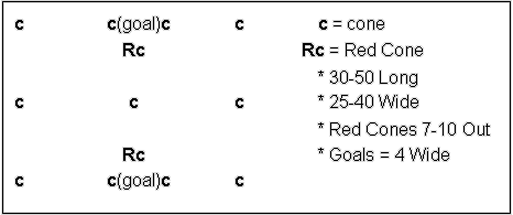
- Use disk cones to outline the field that is 30-50 steps in length and 25-40 steps wide, depending on the age group. (Better to be too short than too long, but width is good so they have room to take the ball wide).
- Use 2 cones to make a "goal" at each end that is 4 steps wide.
- Put one cone in the middle to mark the halfway line.
- Put a Red or painted cone 7-10 steps out from each goal (toward The Halfway Line) to mark the "Scoring Zone" (goals can only be scored from shots inside these cones)
|