Soccer Definitions that Begin with the Letter D
You Can Use the Dictionary to Navigate
The links below as an example of the internal links that make SoccerHelp Premium easy to use. Premium has 1,500 pages, 5,000 links and 70 exclusive SoccerHelp Practice Games. Click here for Premium Pricing and Subscription Options View a Copy of the Premium Home Page
D
D - In soccer, the "Penalty Box Arc" is called the "D" because it looks like a D. (See "Penalty Box Arc"). Soccer D
Danger Zone * (Key Concept) - (aka Scoring Zone and Danger Area). The area extending out from the goal in which most shots occur that actually score. The size of this depends on the player's age. Generally, most goals are scored in the "center", so it is much safer to clear the ball to the side than down the center. (See "Attacking Third" and "Where...From?"). Soccer Danger Zone
Dangerous Attackers * - (aka Most Dangerous Attackers). Any attacker who is in scoring position is a "Dangerous Attacker" & should be marked goalside & ballside by a defender. This is especially true of attackers who are near the goal on corner kicks or free kicks. This is important & you should start to teach this by age 10. (You can still teach this as part of a zone defense). An attacker who is in front of your goal & inside the Penalty Box is more dangerous than one who is toward the side line or outside the Penalty Box & should be marked closely (e.g., within 2 steps). The player with the ball is not necessarily the "Most Dangerous". For example, if the ballhandler is outside of scoring range, it is best to guard him loosely & watch for a mistake, because if the defender gets too close the ballhandler may be able to get past him & become dangerous. Soccer Dangerous Attackers
Dangerous Play - Any action by a player that is unsafe to him or another player, in the judgment of the referee. When contact is made, the referee will consider whether it was "careless, reckless or there was excessive force". The penalty for some types of dangerous actions such as tripping is a direct kick, but for others such as a high kick the penalty is an indirect free kick. (See "Fouls" and "Cards"). Soccer Dangerous Play
Deck - Slang for the Cards the Referee carries; e.g., "He's pulling out the deck a lot today". (See "Cards" and "Booking"). Soccer Deck
Decoy Run - (aka "Dummy Run"). See "Dummy Run". Soccer Decoy Run
Defenders - The term defenders usually refers to the Fullbacks or to the players who are defending the goal that is under attack. Midfielders, for example, also often drop back to defend. In a broader sense, when your team loses the ball, the players closest to the ball should try to steal it back. In this case even the Forwards might be defenders. (See "Fullbacks"). Soccer Defenders
Defend Deep - Defending Deep is a conservative defense and the opposite of "Pushing Up". It refers to leaving your Fullbacks deep on your half of the field, usually within your "Defensive Third" and sometimes within your Penalty Box (you can give them specific boundaries to stay within, such as to not come past the top of the Penalty Box Arc unless it is to kick away a loose ball). The primary reason for Defending Deep would be if the opposing Forwards are faster than your Fullbacks (if the opponent's Forwards are faster, they can get "Breakaways" and score easy goals). Another reason might be if you don't have subs and leave your FB's deep to reduce their running and conserve their energy, so you don't have to sub them. The advantages of Defending Deep are that you won't give up goals on "breakaways" and that your Fullbacks will be in position to defend your goal. The disadvantage is that your Fullbacks don't support your attack as they do if you "Push Up". On Premium there is a great deal of information about how to teach "Defending Deep" and how to attack a "Packed In Defense". See Should You Push Up When You Attack?
Note for U6 and U8 Coaches about Whether to Push Up or Defend Deep: If you are a U6 coach, don't worry about tactics, just have fun. If you are a U8 Rec coach, you are probably better off to Push Up your Fullbacks to the Halfway Line when you attack instead of Defending Deep and having your Fullbacks stop on the Penalty Box Line. There are 2 reasons: The first reason is because your opponents probably can't attack as a team so the threat of giving up a lot of goals on breakaways isn't great. The second reason is that many U8 Rec coaches probably can't train their Midfielders and Forwards to drop back to a position to win cleared balls when their goal is under attack. Defending Deep only works if the Coach can train his Midfielders and Forwards that when their goal is under attack they MUST come back to a position where they can win cleared balls. If the MFs and Fs don't drop back to win the cleared balls, it is a disaster because the team Defending Deep can never clear the ball out of its Defensive Third and the opposing team will win all the balls your Fullbacks try to clear. Remember, every situation is different and your decision should be based on your players and opponents, but if I coached a typical U8 Rec team, I would start by Pushing Up my Fullbacks when I attacked. IF I faced a great team that was scoring on breakaways, then I might consider Defending Deep, BUT I would only Defend Deep if I was able to train my MFs and Fs to drop back to a position to win cleared balls when our goal was under attack, because otherwise we would never clear the ball out of our Defensive Third. As I mention below, I might consider splitting the difference and Pushing Up halfway to the Halfway Line because that would stop most of the breakaways and your Fullbacks wouldn't be as far from your MFs and Forwards, so it would be easier for the MFs and Forwards to win cleared balls. Of course, keep in mind that there are lots of variations of Defending Deep and Pushing Up and being "Pushed Up half way" and "Defending Deep half way" are the same thing - your Fullbacks would be halfway to the Halfway Line in either case. Pushing Up halfway to the Halfway Line would stop most of the breakaways and your Fullbacks wouldn't be as far from your MFs and Forwards, so it would be easier for the MFs and Forwards to win cleared balls. If you coached a U8 Rec team you would probably tell your Fullbacks that their job is to kick the ball forward or to slow down the attack until your midfielders can recover to help. You can probably get away with Pushing Up slow Fullbacks to the Halfway Line until about U9 or U10 most of the time. The reason is that most soccer teams simply don't have the skill to counterattack until U9 or U10. But by U9 or U10, if you Push Up slow Fullbacks against a well-coached team, you will give up lots of goals on breakaways. So, you will be able to beat poorly coached teams, but not well-coached teams. If you have the speed to do so, Pushing Up your Fullbacks is definitely preferable. If you Defend Deep, Push Up your Fullbacks to at least to the Penalty Box Line - don't leave them on the Goal Box Line, that won't help you much and they will be in your Goalie's way. Soccer Defend DeepDefending Deep - See "Defend Deep", above. Soccer Defending Deep
Defending Third - The 1/3 of the field containing your goal. (See "Attacking Third" & "Middle Third"). Soccer Defending Third
Defending To Win - Refers to aggressively pushing up the Fullbacks & even the goalkeeper to support the attack & to "press" if the ball is turned over to the other team with the objective of recovering the ball on the other team's half of the field. This is quite different from a cautious defense that doesn't aggressively push up or get the FB's involved in the attack. The opposite of "Defending Deep". (See "Attacking" & "Push Up"). Soccer Defending To Win
Defense - There are many variations of defense, depending on the formation and style of play you use. Most U8 Rec teams should probably play a simple Zone Defense and "Push Up" their Fullbacks when they attack because their opponents aren't good enough to launch a fast counterattack. Most Rec teams U10 and older should also play a simple Zone Defense but are often better off "Defending Deep" (having the Fullbacks stop at the Penalty Box Line). Most Travel Teams will want to play a defense that combines Zone Defense and man-marking, "Push Up" their Fullbacks when they attack, and use a "Sweeper" or play a "Flat Back 3 or 4".
It is usually much easier to have a good soccer defense than a good soccer offense because defense is about destroying (or disrupting) and offense is about creating. (Think about how easy it is to break a china plate but how hard it is to make a plate). The reason is that you can have a decent defense by simply putting tough, aggressive players near the goal you are defending and having them kick the ball away. By doing so, the opponent must start the attack over each time and if your Midfielders or Forwards can win those cleared balls, then not only do you have the opportunity to attack and score, but you keep the ball away from the opponent so the opponent can't score. On the other hand, to score against a good defense usually requires a coordinated effort involving several players and skillful passing, dribbling, teamwork and doing the right thing at the right time. One mistake - one bad pass - and the attack ends with the ball either kicked away or with the opponent gaining possession of the ball. And even if the attackers are successful in getting close enough for a decent shot, the ball must still get past the Goalkeeper and go into the goal for a score to count. Obviously, soccer offense and defense are related because they are both affected by where you play your best players, by your formation, by your Style of Play (to what extent you Push Up or Defend Deep), and by your player's discipline. Every decision involves trade-offs. See "Shift & Sag", "Support", "Zone Defense", "Formations", "Depth", "Cover", "Mark", "Pressure", "Defending Deep", "Width In Defense", "Shape", "Support Distance & Relative Position", "Defending Third", "Win The Ball", "Ball Watching", "Breakaway", "Clear", "Danger Zone", "Dangerous Attackers", "Goalkeeper", "Verbal Signals", "Where...From?" and Defensive Tips at SoccerHelp Premium. Soccer DefenseDefense Tips - See SoccerHelp Premium. Soccer Defense Tips
Defensive Half - The half of the field containing your goal (your goal is the goal your Goalkeeper defends). See Attacking Half. Soccer Defensive Half
Defensive Midfielders - (Abbreviated as "DMF's"). See "Formations" and "Midfielders". Soccer Defensive Midfielders
Defensive Third - The 1/3 of the field containing your goal (your goal is the goal your Goalkeeper defends). See "Attacking Third" and "Middle Third". Soccer Defensive Third
Dehydration - Soccer coaches should be proactive to prevent dehydration among their players. Soccer Dehydration
Deliver The Ball - This refers to completing a pass, especially a pass that creates a scoring opportunity. (e.g., "He delivered a great ball"). (See "Create" & "Assist"). Soccer Deliver The Ball
Depth (Key Concept) - Depth on defense means having several defenders (ideally, multiple layers of defenders) spaced between the ball & the goal who are in a position to "recover" in time to stop an attack on their goal. This and First Defender/Second Defender are the most important defensive concepts. Depth is the opposite of a "flat" defense. Depth in attack means having support to the rear so the ball can be passed back or "dropped". (See "Support", "Through Balls", "Defending Deep", "Zone Defense", "Flat Defense" & "Cover"). Soccer Depth
Diagonal Run - A Diagonal Run is a run by an "off-the-ball" attacker across the field with some forward movement (not a "square" or "flat" run, but a diagonal run). This type of run can be more beneficial for advanced teams than straight-ahead runs, because it's harder to defend and can distract defenders or pull them out of position. On the other hand, it will only work if the passer is able to "see" the opportunity, understands where to pass and can execute the pass, so it will only work for advanced teams. A Diagonal Run makes it easier for the runner to stay in an onside position while also making a run that confuses or distracts the defenders and it also allows for space to be created for a second and third run. Defenders may be confused and pulled out of position by a Diagonal Run, which could leave "gaps" and open spaces for teammates to attack. Once one player makes a Diagonal Run, it opens up opportunities for more runs by his teammates. These multiple runs can create scoring opportunities, and they start with the Diagonal Run which confuses or distracts the defenders and, hopefully, pulls them out of position. Soccer Diagonal Run
Diagonal Through Ball - A "through ball" that is played diagonally instead of straight ahead. If from far out, it might be played toward the far corner. This can be very effective because it is difficult for defenders to handle. This is for U-11 & up. (See "Through Ball", "Pass To Space", "Push Up" and "Stretch The Field"). Soccer Diagonal Through Ball
Direct Attack - To quickly move the ball forward toward the other teams goal by passing or dribbling; as opposed to a slow "indirect attack" which uses a lot of backward or sideways ("square") passes while searching for a weakness in the defense. Unless your team has excellent passing ability, a direct attack will be more effective. (See "Counterattack", "Attacking", "Possession Style", "Styles of Play", & "Creating Space"). Soccer Direct Attack
Direct Kick - A type of "free kick" given after severe fouls such as hitting or kicking. On a direct kick, a goal can be scored by kicking the ball into the goal without it first touching another player. (See "Free Kick" & "Fouls"). Soccer Direct Kick
Direct Kick Foul - See "Fouls". Soccer Direct Kick Foul
Distribute - Goalkeepers "distribute" the ball by kicking, punting or throwing it. Once they pick up the ball, they have six seconds to punt it or release it. They can pick it up, run with it and then punt it, throw it or drop it and dribble it or kick it. (However, they cannot touch it with their hands outside the "Penalty Box" and once they drop it they can't touch it again with their hands until an opponent has touched it). They can also put it down on the ground and dribble it outside the Penalty Box like a "field player". (See "Punting", "Sidearm Throw" & "Goalkeeper"). Soccer Distribute
DMF - Abbreviation for Defensive Midfielder. (See "Midfielders" & "Formations"). Soccer Defensive Mid Fielder
Drag Back - (aka "Pullback"). See "Pullback". Soccer Drag Back
Drag The Ball - To keep the ball on one foot or very close to the foot so you are moving slowly & "dragging" the ball. This is done in conjunction with a player using his body to shield the ball from a defender & "dragging" the ball with the foot farthest from the defender, or as part of a feint where the player slows up & drags the ball & then either "pops" it past or fakes one way & flicks it the other way using the outside of his foot. Soccer Drag The Ball
Dribbling - (aka Carrying) A player can dribble with any part of the foot. "Control dribbling" is usually with the inside or outside of the foot. "Speed dribbling" is often with the top of the foot (i.e., the "laces"). See "When To Dribble", "Control Dribbling", "Speed Dribbling" & "Pass To Yourself". See How to Teach Soccer Dribbling. Soccer Dribbling
Drills - Soccer Drills
Drive - (aka Power Shot). A shot hit with the "laces". The foot does not go under the ball & the knee should be over the ball when struck with the head looking down (it is very important to keep the eyes on the ball until it is kicked; just like it is important to keep the eyes on a baseball, or a football when catching it or a golf ball when hitting it; if the head goes up too soon, it moves the hips) & a long follow through. Strike the ball halfway up. The shoulder on the same side of the body as the non-kicking foot should be pointing toward the goal before the shot & the shoulders will "square up" to the goal as the kicking foot follows through. (This rotation creates power). Unless the shot must go over a defender, a low shot is preferred because it is more difficult for the goalkeeper to block. (See "Lofted Drive", and "Chip"). Soccer Drive
Drop - Refers to a ball left by the ballhandler for a trailing teammate (i.e., instead of passing backward, the ballhandler "drops" the ball & then makes a run, knowing his teammate is running onto the ball). Can also refer to a soft back pass that the trailer runs onto. This is an alternative to a back pass & is only used when the ballhandler is certain his teammate will get the ball if he drops it. (See "Trailer" & "Back Pass"). Soccer Drop
Drop Kick - A "half-volley" by a goalkeeper (he is the only one who can hold the ball to drop it). Adult goalkeepers sometimes do this instead of punting. This requires perfect timing & seems to me to have no advantages over punting, but there is a greater risk of a mis-kick. I think young goalkeepers should stick to punting or rolling the ball. Soccer Drop Kick
- Any type of feint or deceptive move.
- A "Dummy Run".
- When a receiver intentionally allows a pass to roll through his legs to a teammate after pretending he was going to receive the pass or kick the ball. Soccer Dummy
Dummy Run - (aka "Decoy Run"). A run intended to distract defenders or to draw them away from the area you plan to attack in order to "create space" for a teammate. (See "Overlap", "Checking Off", "Hooking Run", "Diagonal Run" & "Crossover Run"). Soccer Dummy Run
DVDs - Soccer DVDs
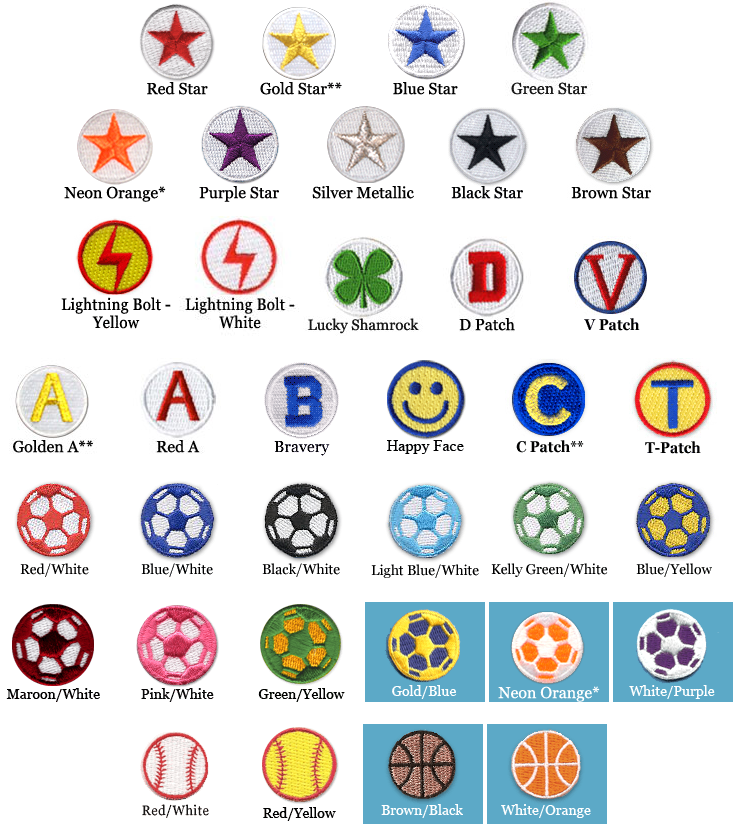
See prices for our iron on Motivational Soccer Patches